
AVD & Windows 365
A clean endpoint for Azure Virtual Desktop and Cloud PCs.
If the real desktop now lives in Azure, the local one is just noise. XPC turns the physical Windows PC into a focused doorway to the cloud desktop your users are actually meant to work in.
The short answer
What is the best endpoint for Azure Virtual Desktop or Windows 365?
The cheapest good endpoint is usually the Windows PC already on the desk. XPC installs on it as an MSI and replaces the local desktop with a single branded screen that launches your Azure Virtual Desktop or Windows 365 Cloud PC session. The Microsoft client stays installed and native on Windows, so sign-in, conditional access, multi-monitor behaviour and media optimisation work as Microsoft designed them, while the local machine stops offering a second desktop for users to confuse with the cloud one.
2
Desktops become 1
The local desktop disappears; the cloud desktop is the workspace.
3
Steps to deploy
Log in to the XPC Cloud Portal, install the MSI, enable XPC Mode.
0
Azure changes
Host pools, images, conditional access and licensing are untouched.
The two-desktop problem
Cloud desktop projects create a specific kind of confusion: two Windows desktops, two start menus, two sets of shortcuts, two places to save a file. Users cannot always tell which one they are in, and support spends its day untangling the difference. Removing the local desktop removes the ambiguity entirely.
Microsoft clients stay native
XPC launches the client, it does not reimplement it. Because Windows remains the local operating system, the Windows App or Remote Desktop client, Entra sign-in, conditional access and any media optimisation components you rely on continue to run in the environment Microsoft supports.
Cheaper than a hardware refresh
Moving desktops to Azure is often justified partly by extending endpoint life. XPC finishes that argument: the ageing PC does not need to run local workloads well, only to present a session, so replacement can be deferred rather than bundled into the project.
One rollout model across platforms
Many estates run more than one remote platform during a transition. XPC presents whichever connections you approve, so a device can be moved between platforms centrally without touching the endpoint again.
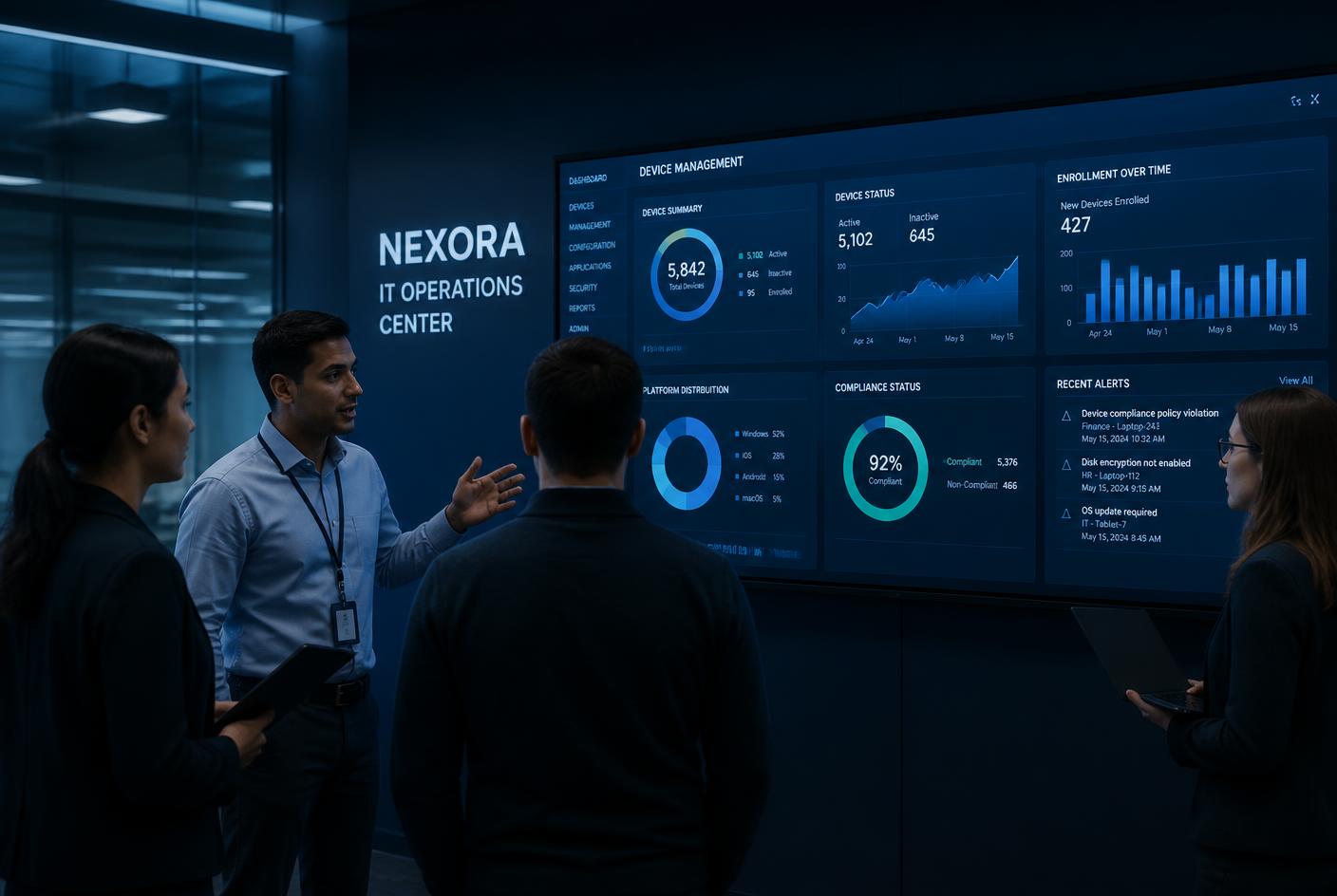
Cloud desktop, local clarity
One desktop for the user. The one you are paying for.
The physical PC becomes an access device; the Cloud PC becomes the only workspace on screen.
Questions we are asked
Straight answers.
Does XPC replace the Windows App or Remote Desktop client?
No. The Microsoft client stays installed on Windows and XPC launches the connections you have approved through it.
Does XPC change anything in Azure?
No. Host pools, images, licensing and conditional access policies are unaffected. XPC is an endpoint-side experience only.
Can we use XPC while migrating between platforms?
Yes. Which connections a device presents is configured centrally, so devices can be pointed at a new platform without a site visit.
Do users still get single sign-on?
Sign-in is handled by the vendor client as it is today; XPC does not sit in the authentication path for the remote session.
Keep reading
Related guides.
Windows thin client
Turn the Windows PCs you already own into focused thin-client endpoints — without replacing the operating system.
Read the guideCitrix endpoints
A focused, brandable Citrix access endpoint on existing Windows PCs, with Workspace app and its optimisations left intact.
Read the guideRDP & RDS endpoints
Give RDP and Remote Desktop Services users one locked screen that launches the right session, on hardware you already own.
Read the guideOther VDI platforms
Horizon, Amazon WorkSpaces, Parallels RAS or a browser workspace — XPC presents whatever client or URL you approve.
Read the guideConvert a PC to a thin client
Extend the life of ageing PCs by turning them into access endpoints — a software change, not a procurement cycle.
Read the guideReplace Windows, or keep it?
An honest look at when replacing the endpoint OS is the right call — and when it is an expensive way to buy a simpler screen.
Read the guideCompare the alternatives
XPC against IGEL, UniconOS, ThinScale, Dell ThinOS, LEAF OS, 10ZiG and Microsoft kiosk features.
See all comparisonsThin-client simplicity, without leaving Windows.
Five PCs are free forever. Log in to the XPC Cloud Portal, install the MSI, enable XPC Mode.