
XPC vs NComputing LEAF OS
Extend the life of the PC — without giving up Windows.
LEAF OS is a small Linux operating system that converts existing PCs, laptops and old thin clients into centrally managed VDI endpoints. XPC has the same goal of keeping serviceable hardware in productive use, but reaches it without replacing the operating system your applications, peripherals and management tooling depend on.
Endpoint OS replacement · Vendor claims sourced from public documentation · Reviewed September 2026
The short answer
What is the difference between XPC and NComputing LEAF OS?
NComputing LEAF OS is a lightweight Linux operating system that repurposes existing PCs and laptops into centrally managed VDI and cloud-workspace endpoints, replacing the installed Windows OS. XPC keeps Windows on the device and presents a locked, brandable access screen for the approved workspaces, cloud services and web applications on top of it. Both extend hardware life and reduce refresh spend; only XPC does so while retaining Windows drivers, agents, peripherals and your existing management stack, and only XPC can be suspended to return the full Windows desktop.
0
Reimages
XPC installs as an MSI onto the existing Windows build.
100%
Windows compatibility retained
Drivers, agents and peripherals stay as they are.
Minutes
To reverse
Suspend XPC Mode from the portal to restore the Windows shell.
Row by row
XPC compared with NComputing LEAF OS.
Each row describes what the decision changes in practice. NComputing capabilities are summarised from the vendor's own public documentation, linked at the foot of this page.
Product role
XPC
Presents multiple approved workspace, cloud and web services through one controlled Windows endpoint
NComputing LEAF OS
Lightweight Linux OS for repurposing PCs into VDI endpoints
What happens to Windows
XPC
Windows is retained and keeps being managed
NComputing LEAF OS
Windows is replaced by LEAF OS on the device
Hardware reuse
XPC
Extends the working life of suitable Windows devices
NComputing LEAF OS
Also targets hardware reuse, including ageing PCs and old thin clients
Deployment
XPC
Install the MSI, enable XPC Mode from the portal
NComputing LEAF OS
Install LEAF OS onto the device and register it with central management
Management model
XPC
Existing Windows RMM, patching and support tooling continue
NComputing LEAF OS
Endpoints are managed through NComputing's management platform
Local agents and peripherals
XPC
Windows drivers, agents and specialist peripherals remain available
NComputing LEAF OS
Requires Linux-side support for the device or peripheral
Branding of the user interface
XPC
Brandable per organisation, site or device group
NComputing LEAF OS
Presentation follows the LEAF OS workspace
Reversibility
XPC
Suspend XPC and the standard Windows shell returns
NComputing LEAF OS
Returning to Windows means reinstalling the operating system
Strongest fit
XPC
Estates with Windows dependencies, POS, MSP-managed clients, mixed hardware
NComputing LEAF OS
Fleets willing to leave Windows behind to stretch old hardware further
Why teams choose XPC
Four reasons the simpler path wins.
Simplicity at the endpoint should not cost a platform migration, a second console or a new set of skills.
Hardware life extension without a migration
You do not have to choose between replacing PCs and replacing their operating system. XPC keeps the device, the OS and the tooling, and changes only what the user sees.
Windows dependencies survive
Anything that only exists as a Windows driver, agent or vendor service keeps working. That is often the reason a Linux conversion stalls halfway through a pilot.
No new console in the estate
XPC governs XPC. Onboarding, patching, monitoring, inventory and remote assistance stay in the platform your team already knows.
Fully reversible
Exceptions happen. An authorised administrator suspends XPC Mode and gets the full Windows desktop back in minutes, then re-enables it when the work is done.
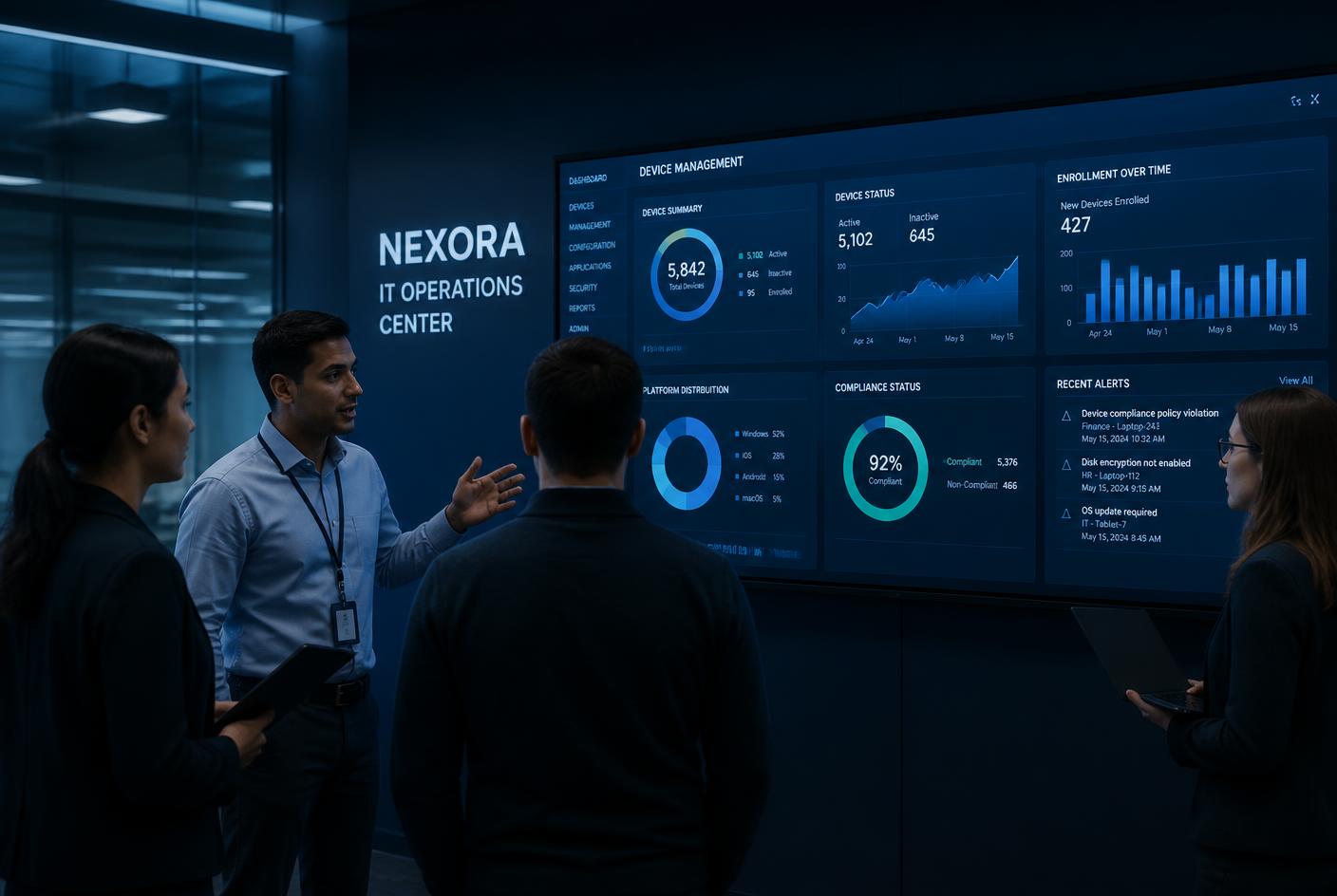
The work you do not have to do
No migration project. No second console. No rollback plan to invent.
Onboarding, patching, monitoring, inventory, remote assistance, certificates, compliance reporting and recovery all keep running on the platform your team already knows.
A fair comparison
When NComputing LEAF OS is the better choice.
NComputing builds a capable product and there are estates it fits better than XPC. These are the situations where we would tell you so.
- The devices are genuinely end-of-life for Windows and cannot be kept patched.
- There are no local Windows agents, services or specialist peripherals to preserve.
- You want the lowest possible endpoint footprint on very old hardware.
Keep comparing
Other endpoint options, side by side.
XPC vs UniconOS
The full business case, with migration effort priced in engineer hours across a representative estate.
Read the comparisonXPC vs Microsoft Kiosk
What it actually takes to engineer a supportable kiosk from Windows features, versus installing XPC.
Read the comparisonXPC vs IGEL
IGEL replaces Windows with an immutable Linux OS managed by UMS. XPC keeps Windows and simplifies what the user sees.
Read the comparisonXPC vs ThinScale
The closest comparison: both keep Windows. XPC is a lighter, purpose-built access shell for approved remote, cloud and web-delivered workspaces, with a simple per-PC price.
Read the comparisonXPC vs Dell ThinOS
ThinOS ships on Dell thin-client hardware and is managed in Wyse Management Suite. XPC works on the Windows PCs you already own.
Read the comparisonXPC vs 10ZiG RepurpOS
RepurpOS converts PCs to a Linux thin-client OS. XPC gets the same focused endpoint without a migration or a new console.
Read the comparisonXPC vs Citrix WEM Transformer
Transformer turns a WEM-managed Windows PC into a reversible kiosk for Citrix. XPC is a dedicated, platform-independent access shell built for MSPs across many unrelated remote-access backends.
Read the comparisonXPC vs Citrix Desktop Lock
Desktop Lock boots a Windows PC straight into a Citrix desktop. XPC is a platform-independent access shell built for estates and MSPs that are not all-Citrix.
Read the comparisonSources
Reviewed September 2026. Third-party capabilities are summarised from the vendor's own public documentation and may change. NComputing and its product names are trademarks of their respective owners; XPC is not affiliated with or endorsed by NComputing. Nothing on this page is a benchmark, a measured result or a commitment.
Why add another operating system?Windows Loves Windows
Thin-client simplicity, without leaving Windows.
Five PCs are free forever. Log in to the XPC Cloud Portal, install the MSI, enable XPC Mode.