
Any VDI platform
Platform-agnostic by design.
XPC is not tied to one vendor's broker. It presents the connections you approve — a vendor client, a published application or a workspace URL — on top of the Windows PCs you already own.
The short answer
Which remote desktop platforms does XPC work with?
XPC is platform-agnostic. It presents and launches the connections you approve, so it can front Citrix, Microsoft RDP and Remote Desktop Services, Azure Virtual Desktop, Windows 365, VMware Horizon, Amazon WorkSpaces, Parallels RAS or a browser-delivered workspace. Where a platform has its own Windows client, that client stays installed and native on the PC and XPC launches it; XPC does not replace or emulate any vendor's protocol or broker.
Any
Approved connection
Vendor client, published app or workspace URL.
3
Steps to deploy
Log in to the XPC Cloud Portal, install the MSI, enable XPC Mode.
1
Endpoint experience
The same locked, branded screen regardless of the platform behind it.
The endpoint should outlive the platform decision
Broker choices change. Estates get acquired, licensing changes, a platform is consolidated. If your endpoint experience is welded to one vendor, every one of those events becomes an endpoint project as well. XPC keeps the endpoint constant so a platform change is a configuration change in the portal.
Mixed estates are normal
Plenty of organisations run more than one platform at once — a legacy Citrix farm alongside a newer cloud desktop, or a specialist application published separately. XPC can present several approved connections on one screen, labelled in language your users understand.
Vendor clients keep their advantages
Because Windows stays in place, each platform's own client keeps its optimisations, peripheral support and update path. That matters most for real-time media, printing and specialist hardware, which are the first things to break when an endpoint OS is replaced.
Honest about the boundary
XPC is an access shell, not a broker. Where a platform requires its own Windows client to be installed, it still does — XPC presents and launches it rather than replacing it. Anything a platform cannot do on Windows today, it will not do behind XPC either.
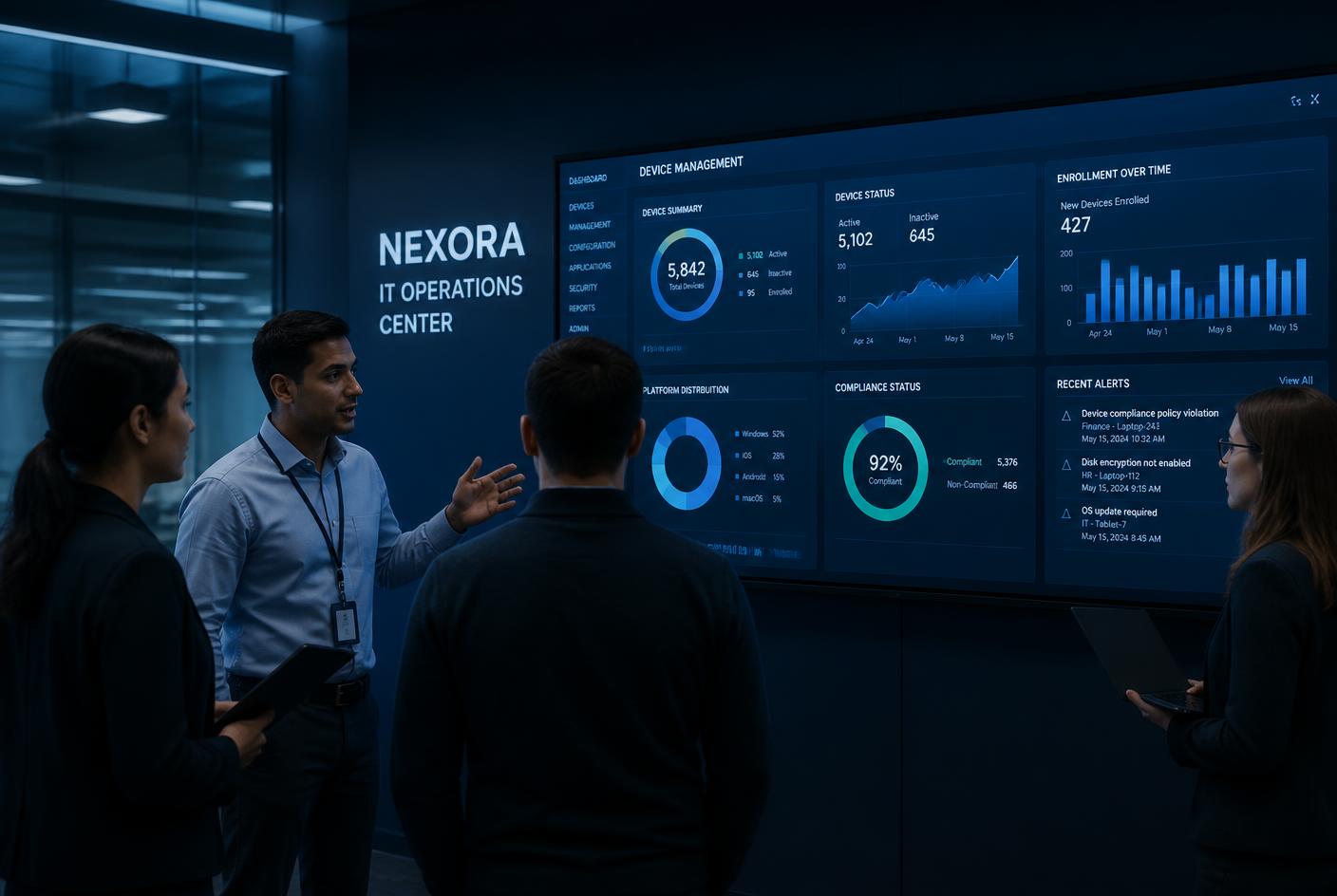
One endpoint, many platforms
Choose your platform on its merits. Keep the same endpoint either way.
Connections and branding are configured centrally, so devices follow platform decisions without a site visit.
For the record
What XPC is, and what it is not.
XPC is a Windows endpoint platform that replaces the ordinary user-facing Windows desktop with a simple, controlled gateway to the approved remote workspaces, cloud services, web applications and other resources your organisation chooses — Citrix, RDP and Remote Desktop Services, Azure Virtual Desktop, Windows 365, Omnissa Horizon (formerly VMware Horizon), Amazon WorkSpaces, Parallels RAS, VNC-compatible access, browser-delivered workspaces and custom scenarios by request. Windows stays installed, patched and managed underneath, and the platform's own client or browser continues handling the connection.
- XPC is
- A Windows-native access shell that replaces the user-facing desktop with one locked, brandable access screen.
- Platform-agnostic: it presents and launches the vendor client, published application or workspace URL you approve.
- Centrally configured and reversible from the XPC Cloud Portal by an authorised administrator.
- Deployed as an MSI in three steps, on the Windows build you already ship.
- XPC is not
- Not a replacement operating system — Windows stays installed and fully managed.
- Not a hypervisor, connection broker or VDI platform.
- Not an RMM, patching or device-management suite; your existing tooling keeps running.
- Not endpoint security — your antivirus and EDR agents remain in place.
Questions we are asked
Straight answers.
Does XPC support VMware Horizon, Amazon WorkSpaces and Parallels RAS?
Yes, in the sense that XPC presents and launches their Windows clients or workspace URLs. The vendor client continues to run natively on Windows.
Is XPC a connection broker?
No. XPC does not broker, load-balance or provision sessions. Your existing platform continues to do all of that.
Can one device present connections to two different platforms?
Yes. You choose which approved connections appear on each device group.
What about web-based workspaces?
A workspace URL can be presented as an approved connection, so browser-delivered environments work the same way as native clients.
Keep reading
Related guides.
Windows thin client
Turn the Windows PCs you already own into focused thin-client endpoints — without replacing the operating system.
Read the guideCitrix endpoints
A focused, brandable Citrix access endpoint on existing Windows PCs, with Workspace app and its optimisations left intact.
Read the guideRDP & RDS endpoints
Give RDP and Remote Desktop Services users one locked screen that launches the right session, on hardware you already own.
Read the guideAVD & Windows 365
A focused endpoint for Azure Virtual Desktop and Windows 365 Cloud PCs, running on the Windows devices you already manage.
Read the guideConvert a PC to a thin client
Extend the life of ageing PCs by turning them into access endpoints — a software change, not a procurement cycle.
Read the guideReplace Windows, or keep it?
An honest look at when replacing the endpoint OS is the right call — and when it is an expensive way to buy a simpler screen.
Read the guideCompare the alternatives
XPC against IGEL, UniconOS, ThinScale, Dell ThinOS, LEAF OS, 10ZiG and Microsoft kiosk features.
See all comparisonsThin-client simplicity, without leaving Windows.
Five PCs are free forever. Log in to the XPC Cloud Portal, install the MSI, enable XPC Mode.