
XPC vs ThinScale ThinKiosk
Both keep Windows. One is a platform. One is a shell.
ThinKiosk is Windows-based software that locks users out of the underlying OS and is managed from ThinScale's own console. XPC shares that Windows-native premise but stays deliberately focused: present the approved remote workspace, cloud service or application, brand the experience, and leave the rest of your Windows operating model in the hands of the tools you already use.
Windows lockdown software · Vendor claims sourced from public documentation · Reviewed September 2026
The short answer
What is the difference between XPC and ThinScale ThinKiosk?
ThinScale ThinKiosk and XPC both convert existing Windows PCs into locked-down access endpoints without wiping the operating system, so neither requires a migration. The difference is scope. ThinKiosk is part of a broader endpoint platform with its own management console, profile switching and secure-remote-worker capabilities. XPC is a focused gateway to approved workspace, cloud and web services with a three-step deployment, a fully brandable interface and simple per-PC pricing, designed to add nothing to your Windows operating model.
3
Steps to deploy
Log in, install the MSI, enable XPC Mode from the portal.
5
PCs free, forever
Prove it on real endpoints before you spend anything.
$2
Per PC per month
Transparent per-endpoint pricing in USD, with volume tiers.
Row by row
XPC compared with ThinScale ThinKiosk.
Each row describes what the decision changes in practice. ThinScale capabilities are summarised from the vendor's own public documentation, linked at the foot of this page.
Product role
XPC
Focused, multi-platform access shell for Windows endpoints
ThinScale ThinKiosk
Windows lockdown and endpoint-management platform
What happens to Windows
XPC
Windows stays and is managed as it is today
ThinScale ThinKiosk
Windows also stays — no OS wipe or device purchase required
Scope of the product
XPC
Deliberately narrow: presentation, approved connections, power actions, maintenance state
ThinScale ThinKiosk
Broader: lockdown, profile switching, role-based admin, workspace management at scale
Deployment
XPC
MSI install, then enable XPC Mode from the XPC Cloud Portal
ThinScale ThinKiosk
Install ThinKiosk on the Windows device and manage it from the ThinScale console
Management model
XPC
Existing Windows RMM and security tooling stay primary; the portal only governs XPC
ThinScale ThinKiosk
Devices are managed centrally in the ThinScale management console
Branding of the user interface
XPC
Brandable per organisation, site or device group, including white-label presentation
ThinScale ThinKiosk
Customisable workspace UI and branding
Reversibility
XPC
Suspend XPC Mode and the standard Windows shell returns
ThinScale ThinKiosk
Software-defined, so removal does not require a reimage
Pricing transparency
XPC
Published per-PC price in USD with 5 PCs free, forever
ThinScale ThinKiosk
Pricing is quoted by the vendor or a reseller
Strongest fit
XPC
Teams that want thin-client presentation and nothing else added to their stack
ThinScale ThinKiosk
Large lockdown programmes needing a full endpoint platform and BYOD/remote-worker controls
Why teams choose XPC
Four reasons the simpler path wins.
Simplicity at the endpoint should not cost a platform migration, a second console or a new set of skills.
Narrow by design
XPC does one job: get the user to the approved remote desktop and keep them there. There is no second endpoint platform to learn, staff or justify at renewal.
Three steps, then done
Log in to the XPC Cloud Portal, install the MSI, enable XPC Mode. The same MSI can go out through the deployment tooling you already use.
Priced in the open
Five PCs are free forever and paid endpoints are $2 per PC per month in USD with volume tiers, so you can build a business case without a sales cycle.
Brandable per customer
MSPs can present the same product in each client's identity — logo, colours, wallpaper and wording — down to a single site or device group.
The work you do not have to do
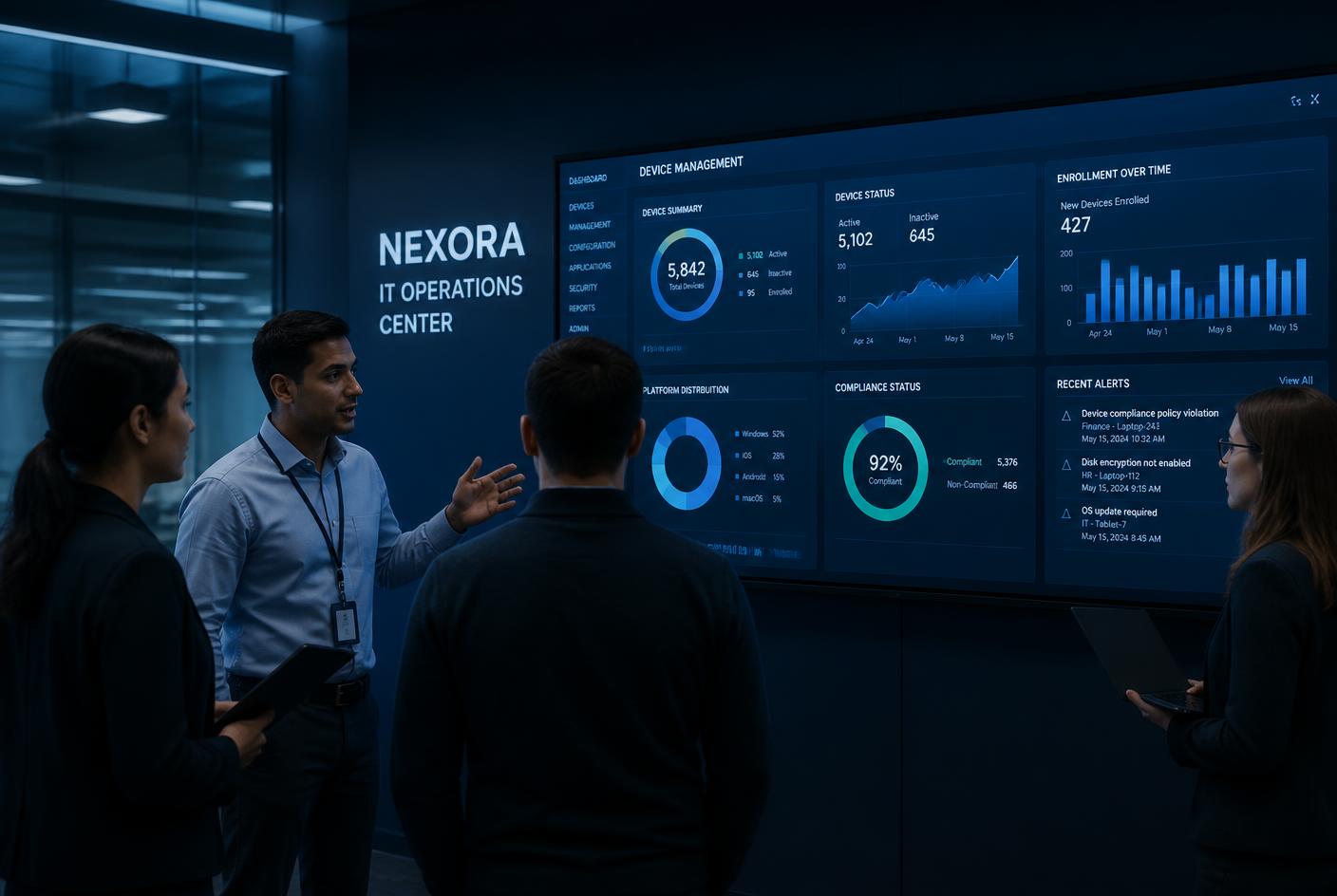
No migration project. No second console. No rollback plan to invent.
Onboarding, patching, monitoring, inventory, remote assistance, certificates, compliance reporting and recovery all keep running on the platform your team already knows.
A fair comparison
When ThinScale ThinKiosk is the better choice.
ThinScale builds a capable product and there are estates it fits better than XPC. These are the situations where we would tell you so.
- You need BYOD or secure-remote-worker controls on unmanaged personal devices.
- You want profile switching and session data controls handled by the same product.
- You are consolidating on a single endpoint platform with role-based administration at scale.
Keep comparing
Other endpoint options, side by side.
XPC vs UniconOS
The full business case, with migration effort priced in engineer hours across a representative estate.
Read the comparisonXPC vs Microsoft Kiosk
What it actually takes to engineer a supportable kiosk from Windows features, versus installing XPC.
Read the comparisonXPC vs IGEL
IGEL replaces Windows with an immutable Linux OS managed by UMS. XPC keeps Windows and simplifies what the user sees.
Read the comparisonXPC vs Dell ThinOS
ThinOS ships on Dell thin-client hardware and is managed in Wyse Management Suite. XPC works on the Windows PCs you already own.
Read the comparisonXPC vs LEAF OS
LEAF OS repurposes old PCs by replacing Windows with Linux. XPC extends the same hardware while keeping Windows and its compatibility.
Read the comparisonXPC vs 10ZiG RepurpOS
RepurpOS converts PCs to a Linux thin-client OS. XPC gets the same focused endpoint without a migration or a new console.
Read the comparisonXPC vs Citrix WEM Transformer
Transformer turns a WEM-managed Windows PC into a reversible kiosk for Citrix. XPC is a dedicated, platform-independent access shell built for MSPs across many unrelated remote-access backends.
Read the comparisonXPC vs Citrix Desktop Lock
Desktop Lock boots a Windows PC straight into a Citrix desktop. XPC is a platform-independent access shell built for estates and MSPs that are not all-Citrix.
Read the comparisonSources
Reviewed September 2026. Third-party capabilities are summarised from the vendor's own public documentation and may change. ThinScale and its product names are trademarks of their respective owners; XPC is not affiliated with or endorsed by ThinScale. Nothing on this page is a benchmark, a measured result or a commitment.
Why add another operating system?Windows Loves Windows
Thin-client simplicity, without leaving Windows.
Five PCs are free forever. Log in to the XPC Cloud Portal, install the MSI, enable XPC Mode.