
XPC vs Citrix UniconOS
Two paths to thin-client simplicity. One replaces Windows. The other keeps it.
Citrix UniconOS and XPC can both give users a focused way to reach virtual desktops. The architectural decision is different. UniconOS replaces Windows with a purpose-built Linux endpoint OS and introduces its own management ecosystem. XPC retains Windows and changes the experience presented to the user.
7 vs 3
Deployment steps
Citrix documents a seven-step UniconOS migration. XPC takes three: log in, install the MSI, enable XPC Mode.
0
New management platforms
XPC adds no second endpoint-management discipline. Your Windows RMM stays the system of record.
Minutes
To reverse a rollout
An administrator suspends XPC and the standard Windows shell returns. No reimage, no OS restoration.
See it working
Why Add Another Operating System?
Time is the real cost
Every one of these is paid for in engineer hours.
An endpoint-platform replacement is not a licence decision. It is testing, qualification, retraining, rewritten runbooks and a rollback plan — each one funded from the same team that already supports the estate.

Activity paid for in engineer hours
UniconOS
XPC
OS migration planning and testing
Pilot builds, recovery partitions, image validation, change approval
UniconOS 80–160 hrs
XPC 4–8 hrs
Hardware qualification
Confirming each endpoint model is supported on the new platform
UniconOS 40–80 hrs
XPC 0 hrs
Driver and peripheral validation
Printers, scanners, EFTPOS, serial devices, headsets, vendor utilities
UniconOS 60–120 hrs
XPC 0–8 hrs
Agent and service replacement
Security, monitoring, VPN, identity and custom corporate agents
UniconOS 40–100 hrs
XPC 0 hrs
Administrator retraining
A second management console, policy model and troubleshooting method
UniconOS 30–60 hrs
XPC 2–4 hrs
Runbook and process rewrites
Onboarding, patching, imaging, support escalation, compliance evidence
UniconOS 30–70 hrs
XPC 2–6 hrs
Rollback design
Defining and testing how a device returns to Windows if required
UniconOS 20–40 hrs
XPC 0 hrs
Indicative total for a 250-endpoint estate
UniconOS 300–630 hrs
XPC 8–26 hrs
Illustrative planning ranges for a representative 250-endpoint estate, provided to frame the discussion. They are not quoted figures, measured results, or a commitment. Actual effort depends on hardware diversity, peripheral dependencies, agent estate and change-control requirements.
Two deployment paths
One is an operating-system project. One is an install.
Citrix documents a genuine migration sequence for UniconOS. XPC is applied over the Windows environment that is already qualified and working.
UniconOS path
Operating-system replacement
- 1Plan and test the operating-system migration
- 2Create a recovery partition on the device
- 3Copy the UniconOS installation files
- 4Restart the device
- 5Install UniconOS over Windows
- 6Optionally enrol into UniconOS Management
- 7Define a rollback / reimage procedure
XPC path
User-experience overlay
- 1Log in to the XPC Cloud Portal
- 2Download the XPC MSI package and install it
- 3Enable XPC Mode for the PC from the portal
Dual boot, examined
Dual boot means two operating systems, not one.
Keeping Windows alongside UniconOS sounds like a safety net. In practice the Windows side never stops needing care, and it sits right next to the system you are trying to protect.
XPC takes the other path: one operating system, managed the way you already manage it, with a focused experience on top. Nothing extra to patch, nothing sitting beside it.
Watch
Dual Boot: The Forgotten Attack Surface
UniconOS replaces the endpoint. XPC simplifies the experience.
Row by row
The same decision, in detail.
Grouped so the argument reads in order: what each product is, how it is deployed and managed, and what happens to the ecosystem around it.
Platform and experience
Product role
XPC
Windows VDI access shell
Citrix UniconOS
Purpose-built Linux endpoint OS plus endpoint-management platform
Underlying platform
XPC
Retains the customer's Windows installation
Citrix UniconOS
Replaces the endpoint OS with UniconOS, formerly eLux
User experience
XPC
Focused remote-workspace interface over Windows
Citrix UniconOS
Dedicated thin-client/virtual-workspace environment
Branding and customisation of the user interface
XPC
The XPC interface is fully brandable and configurable — logo, colours, wallpaper, wording and available connections — per organisation, site or device group, including white-label and promotional presentation
Citrix UniconOS
Endpoint presentation follows the UniconOS environment and its supported theming options; the interface is a managed Linux workspace rather than a designed, per-customer brand surface
Deployment and management
Deployment approach
XPC
Log in, install the MSI, enable XPC Mode
Citrix UniconOS
Qualify hardware and deploy or convert the device to UniconOS
Windows management
XPC
Existing Windows RMM, scripts, support, patching, and security tools remain in place
Citrix UniconOS
UniconOS endpoints are administered through UniconOS Management and its associated operating model
XPC / OS portal role
XPC
XPC Portal manages XPC configurations, status, connection presentation, and maintenance state
Citrix UniconOS
UniconOS Management provides central policy, configuration, visibility, reporting, and firmware/image functions for the endpoint platform
IT operating model
XPC
Existing Windows knowledge and tools remain central
Citrix UniconOS
Introduces UniconOS and UniconOS Management workflows, available in local or Citrix-managed cloud models
Ecosystem and reversibility
Drivers and peripherals
XPC
Retains the Windows driver ecosystem and already-qualified Windows devices
Citrix UniconOS
Requires compatibility with UniconOS, supported hardware, Linux drivers, and available packages
Local agents and services
XPC
Windows-native agents and services can remain available, subject to normal compatibility
Citrix UniconOS
Requires a supported UniconOS / Linux package or integration
Workspace clients
XPC
Selected, installed, and maintained by the customer or MSP
Citrix UniconOS
Delivered and managed within the UniconOS software and package ecosystem
Reversibility
XPC
Authorised administrators can suspend XPC and return to the standard Windows shell
Citrix UniconOS
Returning to Windows is an operating-system migration or reimage decision
Strongest fit
XPC
Mixed Windows estates, MSP-managed clients, POS, specialist peripherals, Windows services, and organisations avoiding an OS migration
Citrix UniconOS
Large, standardised virtual-desktop fleets seeking a dedicated Linux endpoint OS and centralised endpoint-platform management
Watch
Why they kept Windows.
Immutability, examined
Immutable is a good word. It is worth asking what it covers.
Immutability is a real benefit, and UniconOS does it well. It is just narrower than the word suggests. Here is what it does and does not mean in practice.
What is immutable
The system image. The core files are read-only while the device runs.
What is not
Browser profiles, cached sign-ins, user data and persisted settings. Anything that persists can carry a problem forward.
Read-only is not protected at rest
Locking files while running does not stop someone with the disk, another OS or a boot menu from changing them.
A reboot is recovery, not prevention
Resetting on restart cleans up after an incident. It does not stop the incident happening during the session.
Physical access changes everything
With hands on the device, immutability can be defeated on any operating system. That is true for every vendor.
The practical path
A managed Windows estate with deny-by-default application control, such as ThreatLocker (a separate product you choose), plus XPC Advanced Protection.
XPC does not make Windows immutable, and does not need to. It keeps Windows managed, controlled and reversible.
Watch
Persistence Changes the Immutability Story
The claims, answered
Everything in one place.
The common reasons given for moving to UniconOS, and the straightforward answer to each.
“Replace Windows for better security.”
A well-managed Windows estate with application control reaches the same goal without an OS migration.
“Our OS is immutable.”
The image is; persisted data and physical access are not. Prevention still matters more than reset.
“Keep Windows with dual boot.”
Then you still patch, license and support Windows, and add a second OS beside it.
“Lock down the endpoint.”
XPC Advanced Protection closes network, USB and Remote Desktop routes while XPC Mode is on.
“Simpler for users.”
XPC gives the same focused, thin-client experience on the Windows they already have.
“Centralised management.”
XPC Portal configures XPC; your existing RMM keeps managing Windows. No second platform.
Watch
What Exactly Is Immutable?
The work you do not have to do
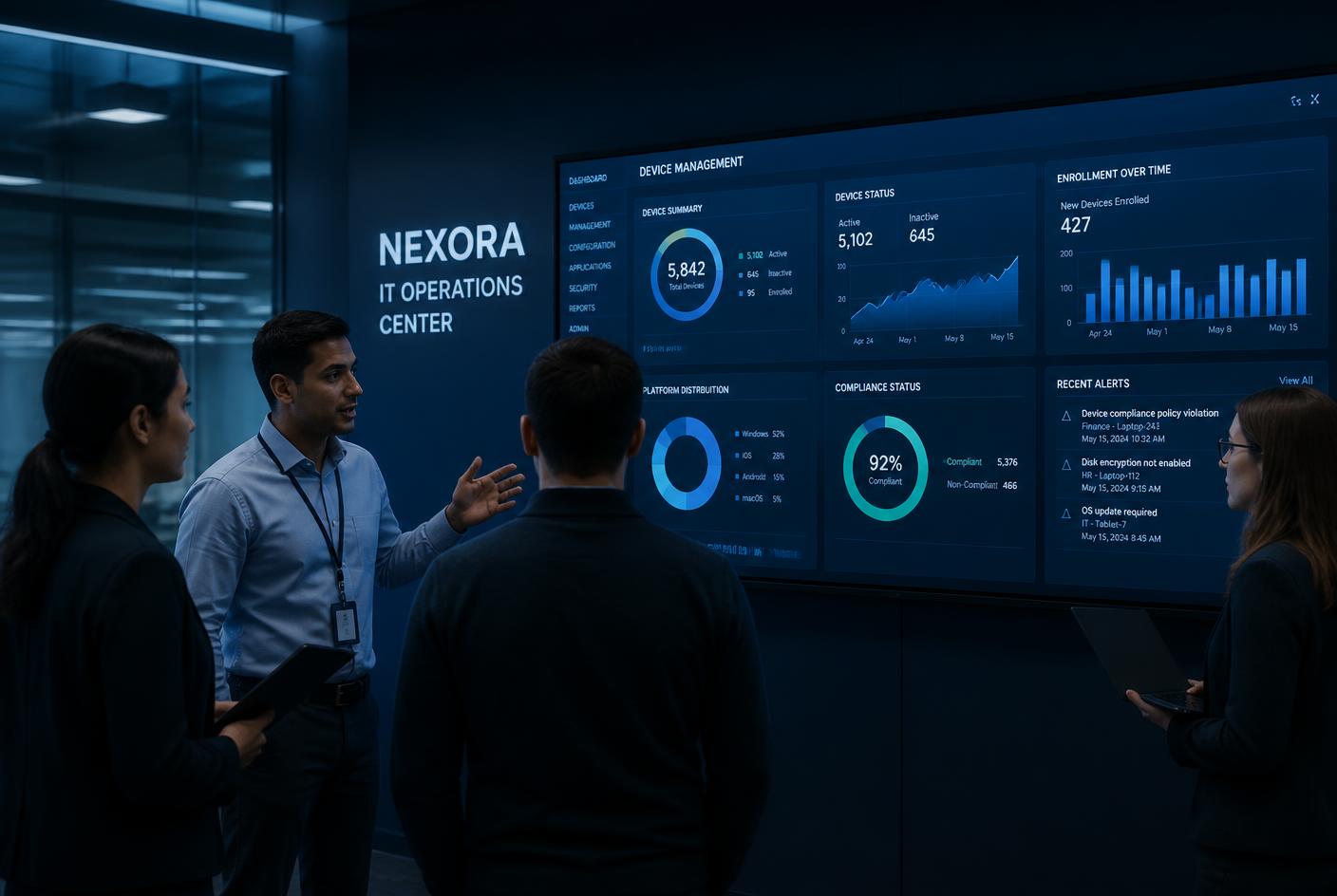
No migration project. No second console. No rollback plan to invent.
Onboarding, patching, monitoring, inventory, remote assistance, certificates, compliance reporting and recovery all keep running on the platform your team already knows.

Four practical differences
What the decision actually changes.
Beyond the feature comparison, these are the four differences that show up in the operating model.
Keep the Windows ecosystem
Windows is not only a desktop. It is also the driver, peripheral, agent, service, plugin, monitoring, remote-support, and vendor-integration ecosystem already operating on the endpoint. XPC keeps that foundation in place while simplifying what the user sees.
Keep the RMM workflow
An MSP or internal IT team can continue using its current Windows management stack. XPC Portal is used for XPC configuration; it is not intended to replace the systems that patch, monitor, secure, and support Windows.
Avoid an endpoint OS migration
Adopting UniconOS means qualifying and operating a different endpoint platform. XPC is the lower-disruption alternative when Windows is already working and the primary problem is the user experience.
Choose based on operational fit
If the goal is a dedicated Linux thin-client estate with comprehensive platform management, UniconOS may be the natural choice. If the goal is to retain Windows compatibility and existing IT operations while presenting a focused, controlled experience for the approved workspaces and services, XPC is the alternative.
In their words
Why they stayed with Windows.
A fair qualification
UniconOS can be an excellent fit for highly standardised Citrix estates that want a dedicated Linux endpoint platform and centralised management. XPC is designed for organisations that want the focused experience without replacing Windows, its drivers, its agents, or the endpoint-management workflows already in place.
Want the full cost-of-change narrative? Read Why XPC.
Brandable. Configurable. Customisable.
A brand surface, not just another managed desktop.
Because XPC designs the screen the user sees, that screen becomes a customisable brand surface — per organisation, per site, per customer.
Your logo, your colours
The XPC interface carries the organisation's logo, colour palette, wallpaper and wording, so the endpoint looks like it belongs to the business rather than to a vendor.
Configured per deployment
Different sites, device groups, departments, schools or customers can each receive their own XPC configuration and presentation from the same XPC Portal tenant.
MSP white-label ready
Managed service providers can present XPC in their own identity, or in each end-customer's identity, across every organisation they manage.
Marketing and promotional use
Because the screen the user sees is fully designed, it can also carry campaign artwork, promotional messaging, safety notices or seasonal branding on retail, reception and public-facing endpoints.
UniconOS presents a managed Linux workspace with the theming options of an endpoint operating system. XPC presents a designed interface intended from the outset to be branded, configured and reused across many deployment scenarios.

In their words
Hear it from a customer.
Why add another operating system?Windows Loves Windows
See the Windows-native alternative in action.
Comparison based on publicly available Citrix product information as at July 2026. Product capabilities and names can change. Citrix, UniconOS, eLux, Scout, and Citrix Workspace are third-party product names and trademarks belonging to their respective owners. XPC is not affiliated with or endorsed by Citrix or Unicon. Official sources: citrix.com/platform/unicon-elux, UniconOS Management, docs.citrix.com/unicon-elux-scout.