
Citrix thin client
A purpose-built Citrix endpoint, on the Windows PCs you already manage.
Citrix Workspace app runs beautifully on Windows. What lets it down is everything else on the screen. XPC removes the distraction without removing the platform that makes Citrix work well.
The short answer
How do I turn a Windows PC into a Citrix thin client?
Install XPC as an MSI on the Windows PC, then enable XPC Mode from the XPC Cloud Portal. The user signs in and sees a single branded screen listing the Citrix connections you have approved, with no local desktop, no file explorer and no start menu. Citrix Workspace app remains installed and native on Windows, so HDX, multi-monitor layouts, printing, smart cards, USB redirection and the Teams and Zoom VDI optimisation components keep working exactly as they were qualified.
Native
Citrix Workspace app
Runs on Windows as normal — XPC launches it, it does not replace it.
3
Steps to deploy
Log in to the XPC Cloud Portal, install the MSI, enable XPC Mode.
0
Platform changes
No change to StoreFront, Citrix Cloud, delivery groups or policies.
Keep the optimisations you were promised
Real-time media optimisation, peripheral redirection and printing are the parts of a Citrix rollout that take longest to get right — and they are exactly what an operating-system change puts back on the table. Because XPC keeps Windows, the components you already qualified stay qualified.
- Microsoft Teams and Zoom VDI optimisation components continue to run on Windows.
- Smart cards, signature pads, scanners and POS hardware keep their Windows drivers.
- Existing printing and multi-monitor behaviour is unchanged.
One screen, only approved connections
Users get the connections you publish and nothing else. Sessions can be launched automatically at sign-in, and endpoint actions such as disconnect, restart and shut down are presented explicitly, so a disconnected session does not become a support call.
Branded so it feels like your service
The access screen carries your logo, colours, wallpaper and wording — per organisation, per site or per device group. For an MSP, that means every customer sees their own brand on identical infrastructure.
Nothing new for the service desk to learn
There is no second console to log in to for device management, no Linux platform to skill up on, and no separate patching lifecycle. Your Citrix admins keep administering Citrix; your Windows admins keep administering Windows.
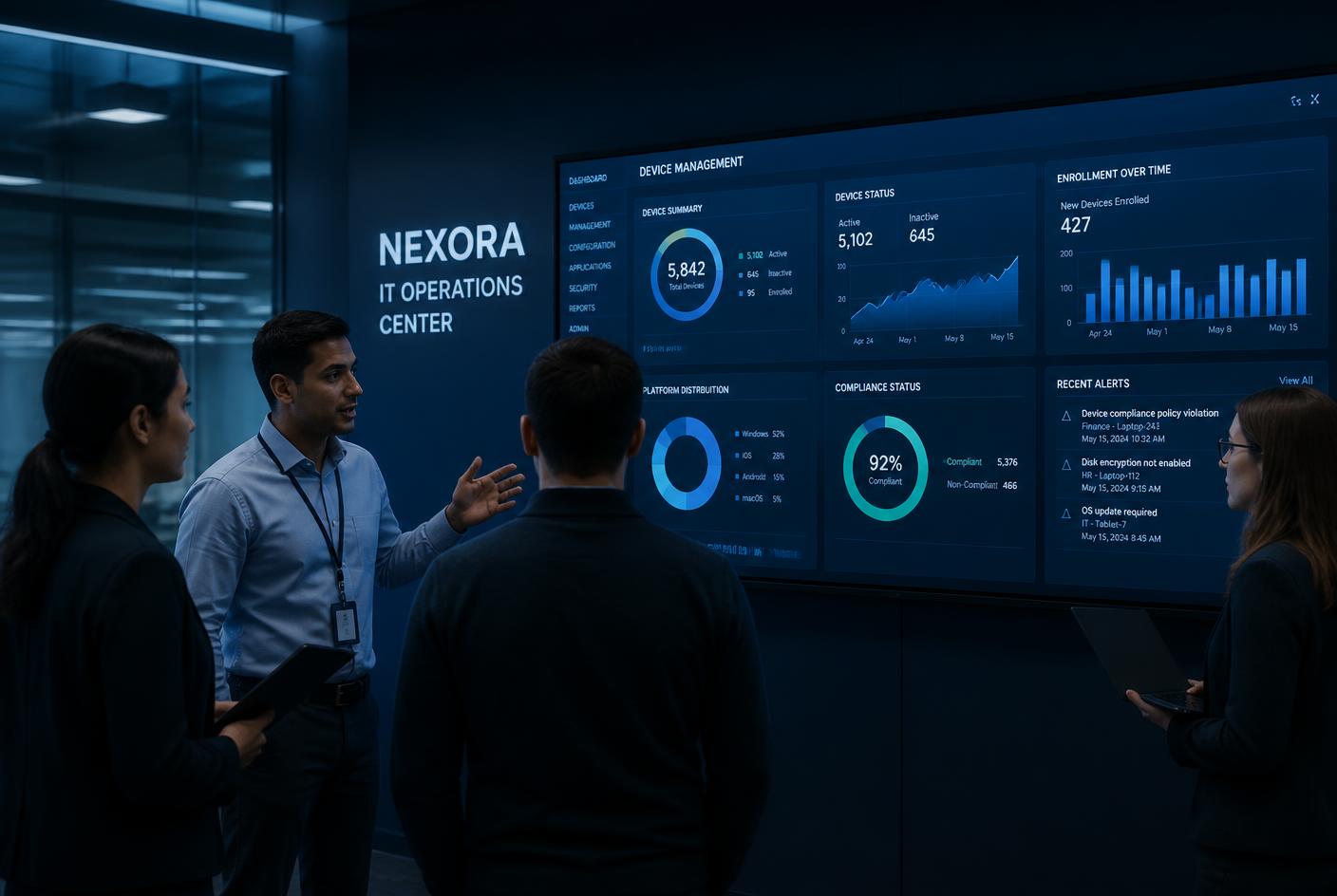
Citrix access, simplified
Change what the user sees. Change nothing about how Citrix is delivered.
StoreFront, Citrix Cloud, delivery groups, policies and the Workspace app all stay exactly as you configured them.
Questions we are asked
Straight answers.
Does XPC replace Citrix Workspace app?
No. Workspace app stays installed on Windows and XPC launches the connections you have approved through it.
Will Teams and Zoom optimisation still work?
Yes. The VDI optimisation components remain installed on Windows and continue to run as they do today.
Do I need to change StoreFront or Citrix Cloud?
No. XPC is an endpoint-side experience. Your Citrix platform configuration is untouched.
What happens when a session disconnects?
The user returns to the XPC access screen, where reconnecting, restarting or shutting down are clear, deliberate actions rather than guesswork.
Can different sites see different connections?
Yes. Connections and branding are configured centrally in the XPC Cloud Portal and can differ by organisation, site or device group.
Keep reading
Related guides.
Windows thin client
Turn the Windows PCs you already own into focused thin-client endpoints — without replacing the operating system.
Read the guideRDP & RDS endpoints
Give RDP and Remote Desktop Services users one locked screen that launches the right session, on hardware you already own.
Read the guideAVD & Windows 365
A focused endpoint for Azure Virtual Desktop and Windows 365 Cloud PCs, running on the Windows devices you already manage.
Read the guideOther VDI platforms
Horizon, Amazon WorkSpaces, Parallels RAS or a browser workspace — XPC presents whatever client or URL you approve.
Read the guideConvert a PC to a thin client
Extend the life of ageing PCs by turning them into access endpoints — a software change, not a procurement cycle.
Read the guideReplace Windows, or keep it?
An honest look at when replacing the endpoint OS is the right call — and when it is an expensive way to buy a simpler screen.
Read the guideCompare the alternatives
XPC against IGEL, UniconOS, ThinScale, Dell ThinOS, LEAF OS, 10ZiG and Microsoft kiosk features.
See all comparisonsThin-client simplicity, without leaving Windows.
Five PCs are free forever. Log in to the XPC Cloud Portal, install the MSI, enable XPC Mode.