
XPC vs Citrix WEM Transformer
One feature inside a bigger platform. One product built around the access screen.
Transformer is a kiosk-mode feature of Citrix Workspace Environment Management (WEM), now configurable from the WEM web console, that turns a Windows PC into a reversible web or application launcher pointed at a remote desktop interface. XPC is a dedicated, lightweight Windows endpoint-experience product built around the same idea — present the approved connection and nothing else — but built to be platform-independent from the outset, so it presents Citrix, RDP/RDS, Azure Virtual Desktop, Windows 365, Omnissa Horizon, Amazon WorkSpaces, Parallels RAS, VNC-compatible access and browser-delivered workspaces from a single interface, which matters most to MSPs managing many unrelated customer environments at once.
Citrix add-on · Vendor claims sourced from public documentation · Reviewed September 2026
The short answer
What is the difference between XPC and Citrix WEM Transformer?
Citrix WEM Transformer is a kiosk-mode feature of the Workspace Environment Management platform: it converts a Windows PC into a reversible thin client that redirects users to a configured remote desktop interface, with site lists, a tool list, a process launcher for RDP or third-party clients, and lockdown controls such as hiding the taskbar and blocking Alt-Tab. XPC is a standalone, dedicated Windows endpoint-experience product with the same reversible, kiosk-style premise, but it does not implement any single connection protocol itself and is deliberately platform-independent — presenting Citrix, RDP/RDS, AVD, Windows 365, Omnissa Horizon, Amazon WorkSpaces, Parallels RAS, VNC-compatible access, browser workspaces and custom scenarios by request, managed through the XPC Portal built for organisations serving many separate customers rather than one Citrix estate.
1
Interface, any backend
XPC presents Citrix, RDP, AVD, Horizon, WorkSpaces, RAS and more from one shell.
3
Steps to deploy
Log in to the XPC Cloud Portal, install the MSI, enable XPC Mode.
$2
Per PC per month
Published per-endpoint pricing in USD, with 5 PCs free forever.
Row by row
XPC compared with Citrix WEM Transformer.
Each row describes what the decision changes in practice. Citrix capabilities are summarised from the vendor's own public documentation, linked at the foot of this page.
Product role
XPC
Dedicated, platform-independent access shell for approved remote-workspace connections
Citrix WEM Transformer
A kiosk-mode feature inside the broader WEM environment-management platform
What happens to Windows
XPC
Windows stays, fully managed and fully compatible
Citrix WEM Transformer
Windows also stays — Transformer is documented as a fully reversible kiosk mode
Backend flexibility
XPC
Built to be protocol-independent: Citrix, RDP/RDS, AVD, Windows 365, Omnissa Horizon, Amazon WorkSpaces, Parallels RAS, VNC-compatible access, browser workspaces
Citrix WEM Transformer
Points a web/application launcher or process launcher at a configured remote desktop interface, with explicit modes for Citrix, Microsoft RDS and VMware View session monitoring
Deployment and licensing
XPC
Install the MSI, enable XPC Mode from the XPC Portal; XPC does not require WEM or a Citrix entitlement
Citrix WEM Transformer
Configured as part of a WEM configuration set from the WEM console; requires a WEM entitlement
Management console
XPC
XPC Portal, purpose-built for MSPs governing many unrelated customer organisations from one place
Citrix WEM Transformer
WEM console (service or on-premises), governing Transformer alongside profile, environment and resource-optimisation settings
Lockdown controls
XPC
Locked, brandable interface presenting only approved connections, with admin unlock via the portal
Citrix WEM Transformer
Hides taskbar and Start, blocks Alt-Tab, supports an always-available admin menu and Ctrl+Alt+U unlock password
Session/process handling
XPC
Presents and launches the approved connection type per device or group, independent of the backend
Citrix WEM Transformer
Process Launcher mode can run a specified command line (for example mstsc.exe) and monitor Citrix, Microsoft RDS or VMware View sessions to trigger end-of-session actions
Branding of the interface
XPC
Fully brandable per organisation, site or device group — logo, colours, wallpaper and wording
Citrix WEM Transformer
Custom title bar, clock and application panel; presentation follows the WEM Agent kiosk UI
Reversibility
XPC
An authorised admin suspends XPC Mode from the portal and the standard Windows shell returns
Citrix WEM Transformer
Citrix documents Transformer as fully reversible; disabling it in the configuration set returns the standard desktop
Strongest fit
XPC
MSPs and mixed estates spanning several unrelated remote-access platforms, or teams that want a narrow, dedicated product
Citrix WEM Transformer
Organisations already standardised on WEM for Citrix environment management that want kiosk mode as one more setting in that platform
Why teams choose XPC
Four reasons the simpler path wins.
Simplicity at the endpoint should not cost a platform migration, a second console or a new set of skills.
Built for many backends, not one
Transformer's process launcher and session monitoring are built around Citrix, Microsoft RDS and VMware View modes. XPC starts from the assumption that an MSP's customers run different platforms entirely, and presents Citrix, RDP, AVD, Windows 365, Omnissa Horizon, Amazon WorkSpaces, Parallels RAS, VNC-compatible access and browser workspaces through the same interface.
A dedicated product, not one setting among many
WEM is a broad platform covering profile management, environment settings and resource optimisation, with Transformer as one feature inside it. XPC's entire scope is the access-screen experience, so there is nothing else to license, learn or configure to get it working.
A console built for MSPs
The XPC Portal is designed around one organisation managing many separate customers with different branding and different backends — not one environment-management console for one Citrix estate.
No WEM or Citrix entitlement required
XPC does not require Workspace Environment Management or a Citrix licence to run. It installs directly on the Windows endpoint and works with whichever remote-access platform that endpoint needs to reach.
The work you do not have to do
No migration project. No second console. No rollback plan to invent.
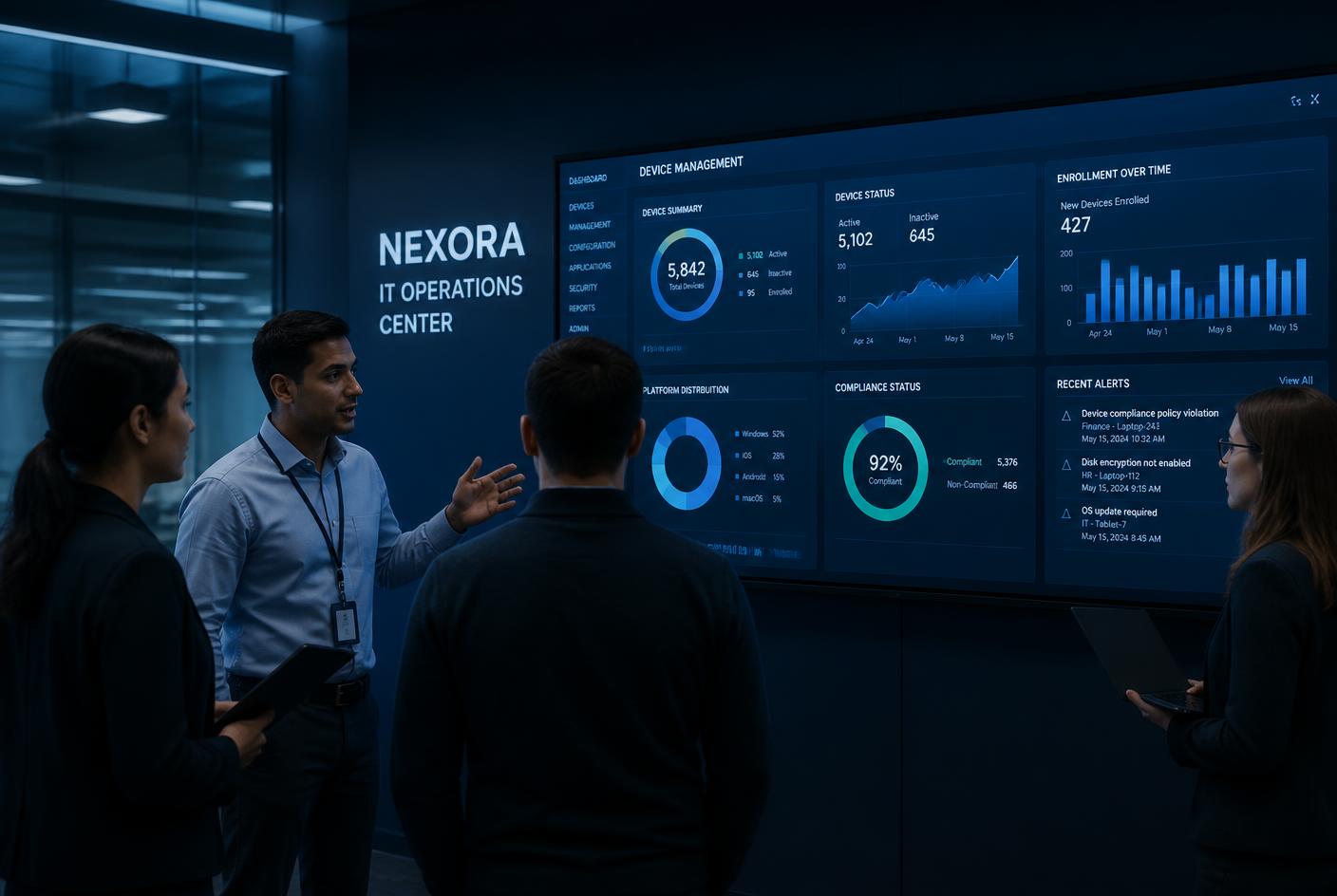
Onboarding, patching, monitoring, inventory, remote assistance, certificates, compliance reporting and recovery all keep running on the platform your team already knows.
A fair comparison
When Citrix WEM Transformer is the better choice.
Citrix builds a capable product and there are estates it fits better than XPC. These are the situations where we would tell you so.
- You are already running Citrix Workspace Environment Management for profile and environment management, and want kiosk mode as one more setting inside a platform you already administer.
- Every endpoint you are configuring only ever needs to reach Citrix, Microsoft RDS or VMware View — Transformer's session monitoring is built specifically around those three.
- You want process-launcher control down to a specific command line and arguments (for example, a scripted mstsc.exe connection) rather than a curated set of connection types.
- Your WEM licensing already covers the estate, so Transformer effectively costs nothing extra to enable.
Keep comparing
Other endpoint options, side by side.
XPC vs UniconOS
The full business case, with migration effort priced in engineer hours across a representative estate.
Read the comparisonXPC vs Microsoft Kiosk
What it actually takes to engineer a supportable kiosk from Windows features, versus installing XPC.
Read the comparisonXPC vs IGEL
IGEL replaces Windows with an immutable Linux OS managed by UMS. XPC keeps Windows and simplifies what the user sees.
Read the comparisonXPC vs ThinScale
The closest comparison: both keep Windows. XPC is a lighter, purpose-built access shell for approved remote, cloud and web-delivered workspaces, with a simple per-PC price.
Read the comparisonXPC vs Dell ThinOS
ThinOS ships on Dell thin-client hardware and is managed in Wyse Management Suite. XPC works on the Windows PCs you already own.
Read the comparisonXPC vs LEAF OS
LEAF OS repurposes old PCs by replacing Windows with Linux. XPC extends the same hardware while keeping Windows and its compatibility.
Read the comparisonXPC vs 10ZiG RepurpOS
RepurpOS converts PCs to a Linux thin-client OS. XPC gets the same focused endpoint without a migration or a new console.
Read the comparisonXPC vs Citrix Desktop Lock
Desktop Lock boots a Windows PC straight into a Citrix desktop. XPC is a platform-independent access shell built for estates and MSPs that are not all-Citrix.
Read the comparisonSources
- Citrix — Transformer settings (Workspace Environment Management service)
- Citrix — Transformer settings (Workspace Environment Management current release)
Reviewed September 2026. Third-party capabilities are summarised from the vendor's own public documentation and may change. Citrix and its product names are trademarks of their respective owners; XPC is not affiliated with or endorsed by Citrix. Nothing on this page is a benchmark, a measured result or a commitment.
Why add another operating system?Windows Loves Windows
Thin-client simplicity, without leaving Windows.
Five PCs are free forever. Log in to the XPC Cloud Portal, install the MSI, enable XPC Mode.